Press play. The current line shows up here with its translation.

No transcript yet.

Captions in your language

If YouTube has captions for this video, turn them on with CC in the player. To read them in your language, open the video on YouTube and choose Settings, Subtitles, Auto-translate.

Open on YouTube

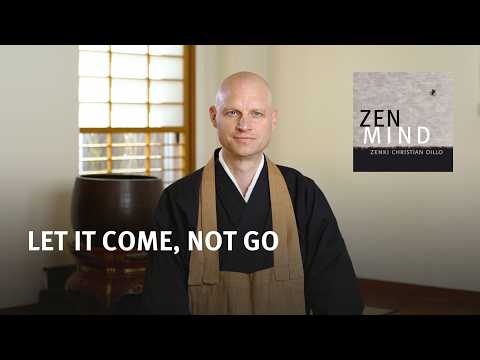
Let It Come, Not Go

Oct 8, 2026Spoken in EnglishDharma talkMahayana

DescriptionThis talk starts from the common wish for a peaceful place in ourselves that protects us permanently from difficulty. The talk invokes the koan "Dongshan's No Cold or Heat" and reads it as a teaching about our relationship to impermanence: conditions alternate outside our control and we typically meet them with compariMore
This talk starts from the common wish for a peaceful place in ourselves that protects us permanently from difficulty. The talk invokes the koan "Dongshan's No Cold or Heat" and reads it as a teaching about our relationship to impermanence: conditions alternate outside our control and we typically meet them with comparison and preference. Our wish to escape into stability is the question religion has answered with two ideas: (1) a better world elsewhere (heaven, nirvana) and (2) a path by which the individual gets there. Against this, the talk sets Nagarjuna's claim that samsara and nirvana have the same boundaries: enlightenment does not change the world; what changes is our activity. Emptiness is read as an activity of emptying, and what is emptied is our grip on things, including the grip on ourselves. Loosening that grip does not dispel the discomfort, but it does free us from suffering. Dongshan's final answer, "when it's cold, be cold through and through," names what this means in practice: letting an experience come rather than trying to get away from it. Picking up a recent episode, "Sitting Like a Buddha," the talk suggests making a stable location in the belly from which to let things come, then releasing even that center into an undivided field: being a self without being a self. Welcome to Zen Mind! Our live fall practice course begins on October 17th! The course explores the Buddha’s first teaching, the Four Noble Truths, through the lens of Zen practice. Togeth

Terms in this video

suffering
Pain and the unsatisfactory quality of all conditioned experience; the first noble truth.
emptiness
The lack of any independent, unchanging essence in phenomena.
impermanence
All conditioned things arise, change and pass away.
nirvana
The ending of greed, hatred and delusion, and so of suffering; the goal of the path.
samsara
The ongoing cycle of birth, death and rebirth.

How other traditions teach suffering

Theravada24,220 videos

Vajrayana4,023 videos

Secular59 videos

Across traditions1,626 videos

All teachings on suffering

Keyboard shortcuts

jk
Move selection down / up
Enter
Open selection
/
Search
l
Watch later (selection or current video)
Space
Play / pause (watch page)
?
Show this help
Esc
Close / leave the search box